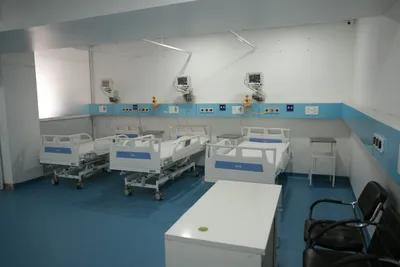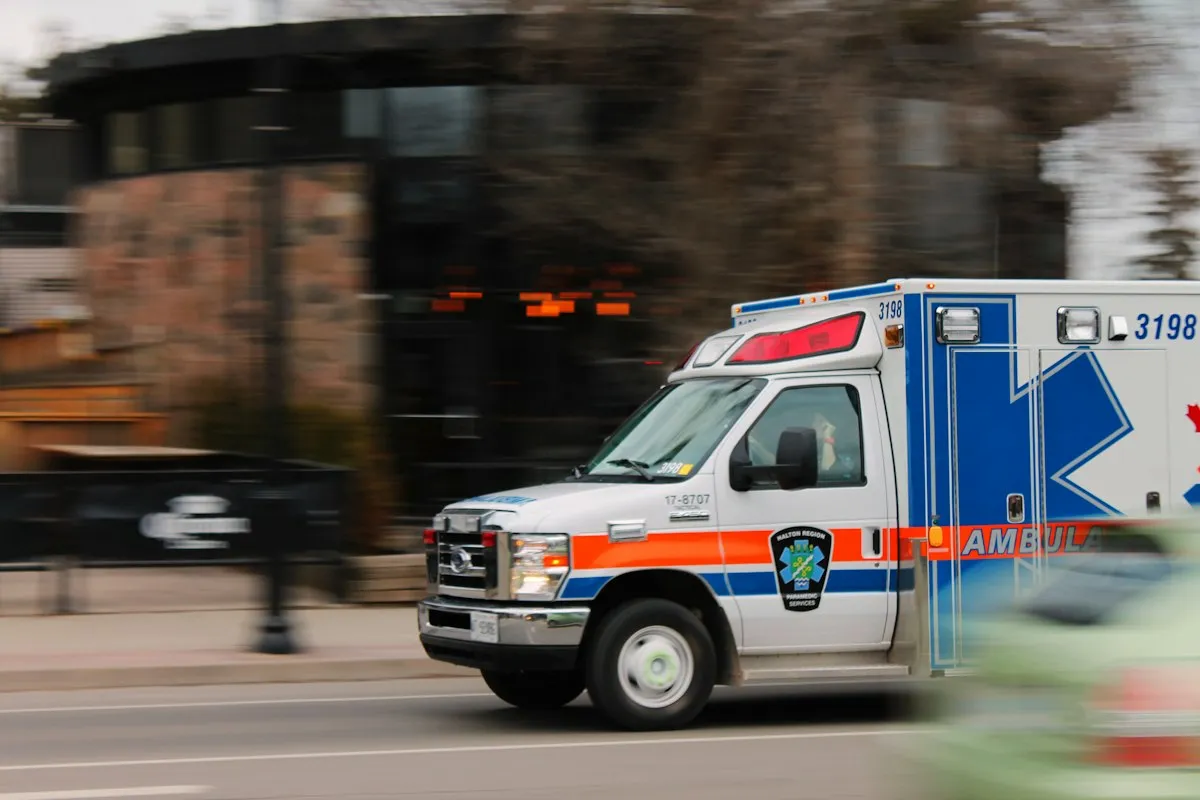
In modern emergency medicine, the hospital does not begin at the casualty triage doors—it begins the exact second an emergency response vehicle wheels out of the bay. For acute myocardial infarctions, polytrauma, stroke, and pediatric respiratory collapse, the concept of the "Golden Hour" dictates clinical survival. Yet across Indian healthcare institutions, emergency pre-hospital care frequently suffers from fragmented dispatch communications, missing onboard life-support equipment, uncalibrated defibrillators, and unmonitored transit times. Under NABH 5th & 6th Edition Emergency Services benchmarks and the mandatory National Automotive Industry Standard (AIS-125), Indian hospitals must transition ambulance operations from simple transport services into high-precision, clinically governed mobile intensive care units backed by automated GPS dispatching and real-time electronic documentation.
Executive Summary: Ambulance Fleet & Emergency Pre-Hospital Benchmarks
- AIS-125 Construction Compliance: Ambulances in India must be certified under AIS-125 Part 1 and Part 2, categorized into Type A (First Aid), Type B (Patient Transport), Type C (Basic Life Support - BLS), and Type D (Advanced Life Support - ALS) with mandatory crash-tested stretcher anchorages, 220V inverter power circuits, and piped medical gas manifolds.
- NABH Golden Hour Response Benchmarks: Hospital emergency departments must measure three statutory KPIs: Dispatch Turnaround Time (wheels rolling <3 minutes from emergency call receipt), Activation-to-Scene Time (<15 minutes urban radius), and Handover-to-Triage Time (<5 minutes at ED casualty bay).
- ALS Mobile ICU Equipment Mandate: Type D ALS vehicles must feature transport ventilators with PEEP regulation, biphasic defibrillators with 12-lead ECG telemetry, syringe infusion pumps, portable suction, adult/pediatric intubation kits, and cold-chain emergency drug storage.
- Daily Shift Checklist & Calibration Governance: Paramedic and biomedical engineering teams must maintain daily digital verification logs for oxygen cylinder manifold pressure (≥137 bar), suction negative pressure (≥-400 mmHg), and AED battery self-test discharge cycles.
- Closed-Loop HMS & Telemetry Integration: Deploying an enterprise Hospital Management Software with GPS ambulance dispatching enables real-time traffic route tracking, auto-notifies casualty triage of incoming patient vitals, and automatically logs fuel, maintenance, and patient trip billing.
1. The Strategic Role of Hospital-Managed Ambulance Fleets in India
In high-density Indian metropolitan hubs as well as tier-2 and tier-3 healthcare ecosystems, hospital-operated ambulances serve as the vital frontline intake channel for tertiary care admissions. When managed effectively, an in-house fleet of Advanced Life Support (ALS) and Basic Life Support (BLS) ambulances does more than transport patients—it initiates emergency resuscitation in transit, stabilizes hemodynamics before hospital arrival, and dramatically elevates clinical survival rates in critical cardiac arrest, ischemic stroke, and polytrauma scenarios.
Conversely, an unmanaged ambulance service represents severe medico-legal, clinical, and financial exposure. Equipment breakdown during transit, lack of dedicated paramedic staffing, or unexpected oxygen cylinder depletion can trigger catastrophic patient mortality and irreversible hospital reputation damage. Under NABH Hospital Quality indicators, ambulance readiness and response times are closely audited as core measures of patient safety and emergency care capabilities.
2. Statutory Ambulance Standards: AIS-125 Classification Breakdown
The Ministry of Road Transport and Highways (MoRTH) and the Automotive Research Association of India (ARAI) enforce AIS-125 (Automotive Industry Standard for Ambulances). Indian healthcare providers purchasing or retrofitting ambulances must operate strictly within these legal vehicle specifications:
| AIS-125 Type | Designation & Clinical Scope | Mandatory Onboard Equipment | Mandatory Staffing Ratio |
|---|---|---|---|
| Type A | First Responder Unit: Rapid intervention motorcycle or compact vehicle for immediate stabilization before transport arrival. | First-aid trauma kit, Automated External Defibrillator (AED), portable oxygen cylinder with mask, cervical collars. | 1 Trained Emergency Medical Technician (EMT) / First Responder driver. |
| Type B | Patient Transport Ambulance: Non-emergent convalescent transfer of stable bed-bound or wheelchair patients. | AIS-compliant auto-loading stretcher, primary first aid kit, portable oxygen cylinder with flowmeter, basic splints. | 1 Certified Ambulance Driver + 1 General Nursing Assistant / Attendant. |
| Type C | Basic Life Support (BLS): Acute patient transport requiring active continuous vital signs monitoring and basic resuscitation. | Multi-parameter monitor (NIBP, SpO2, ECG), portable electric suction, biphasic AED, manual resuscitator (Ambu bag), spinal board. | 1 BLS-certified driver + 1 EMT-Basic (Emergency Medical Technician). |
| Type D | Advanced Life Support (ALS): Mobile Intensive Care Unit for hemodynamically unstable, intubated, or critical emergency patients. | Pneumatic/turbine transport ventilator, biphasic defibrillator with pacing & 12-lead ECG telemetry, syringe infusion pumps, video laryngoscope, cold storage drug box. | 1 Certified Ambulance Driver + 1 ACLS-certified Emergency Physician or Critical Care Nurse + 1 EMT-Advanced. |
3. Critical Equipment, Calibration & Pre-Trip Readiness Protocols
Equipment failure inside an ambulance during transit is an unacceptable clinical risk. NABH guidelines require healthcare facilities to maintain preventive maintenance, daily functional inspections, and biomedical calibration schedules for all vehicle medical assets:
NABH Mandatory Daily Ambulance Medical Equipment Audit Checklist
- Dual Oxygen Cylinder Manifold Verification: Inspect onboard dual-D or M-size oxygen cylinders. Verify pressure gauges read ≥137 bar (2,000 PSI). Ensure automated switchover regulators and auxiliary portable cylinders (pin-index safety system) are 100% full.
- Defibrillator & AED Energy Discharge Self-Test: Execute daily 30-joule shock test into internal test load. Verify battery charge indicates ≥90%, pediatric/adult multifunction electrode pads are within expiration dates, and ECG lead cables are intact.
- Transport Ventilator Pneumatic & Electronic Integrity: Verify ventilator self-check passes without sensor errors. Confirm oxygen input high-pressure hose connection, circuit exhalation valve seals, and battery runtime capability (≥4 hours uninterrupted operation).
- Aspiration & Suction Vacuum Test: Test high-vacuum portable suction unit. Pressure gauge must achieve -400 to -500 mmHg within 5 seconds of tubing occlusion; disposable liner and bacterial hydrophobic filter must be sterile.
- Emergency Drug Box & Cold Chain Verification: Inspect sealed emergency drug kit containing adrenaline, atropine, amiodarone, dextrose 25%, midazolam, and sublingual nitrates. Confirm temperature indicator on insulated cooler reads between 2°C and 8°C for thermolabile medications.
4. NABH Ambulance Response Time Benchmarks & KPI Tracking
Emergency medical services performance is evaluated through rigorous clinical time-metrics. NABH requires hospitals to collect, analyze, and present quarterly audit reports on response time intervals:
- Dispatch Turnaround Time (DTT): The interval between emergency call logging at the hospital control desk and vehicle wheels turning out of the ambulance bay. Standard: ≤ 3 minutes for ALS calls, ≤ 5 minutes for BLS calls.
- Call-to-Scene Arrival Time: Transit time across designated catchment zones. For tier-1 Indian metros during peak congestion, geo-fenced targets are set at ≤20 minutes, while night and non-peak targets must achieve ≤12 minutes.
- Scene Time & Field Stabilization: Time spent by paramedics stabilizing airway, initiating IV access, and securing spinal immobility prior to vehicle movement. Standard: ≤10 minutes for trauma ("Platinum Ten Minutes") and ≤15 minutes for medical emergencies.
- Casualty Handover Turnaround: Transfer of clinical custody from ambulance paramedics to ED casualty trauma teams, including verbal SBAR handover and digital telemetry sync. Standard: ≤ 5 minutes.
5. Standard Operating Roadmap: 5 Pillars of Digital Fleet Governance
To eliminate operational bottlenecks, ensure full NABH audit compliance, and guarantee prompt emergency responses, hospital leadership must institute this 5-pillar operating roadmap:
- Pillar 1: Centralized Digital Dispatch & Intelligent GPS Telematics: Transition from analog phone logs to a centralized emergency call-taking dashboard. Real-time GPS mapping displays vehicle location, fuel levels, ignition status, and predicted traffic arrival times, dispatching the geographically closest unit automatically.
- Pillar 2: Pre-Hospital Tele-Triage & Live Telemetry Sync: Equip ALS fleets with cellular IoT telemetry gateways. Paramedics transmit real-time 12-lead ECGs, arterial oxygenation curves, and Glasgow Coma Scale (GCS) scores directly to the hospital's Emergency Department workstation before vehicle arrival, enabling cath-lab or stroke-thrombolysis prep.
- Pillar 3: Rigorous Fleet Maintenance & Automotive Safety: Implement mandatory preventive maintenance schedules for vehicle mechanicals: brake pad wear, tire tread depth (≥2.5 mm), dual alternator functioning, air suspension leveling, and emergency siren/strobe light lumens.
- Pillar 4: Infection Control & Chemical Decontamination: Enforce strict between-trip vehicle disinfection. All internal vinyl walls and non-porous floorings must undergo 1:100 sodium hypochlorite wipe-down. In cases of infectious droplet or airborne transfer (swine flu, tuberculosis), the patient cabin must execute automated hydrogen peroxide vapor (HPV) fogging.
- Pillar 5: Comprehensive EHR Integration via Enterprise HMS: Utilizing a modern Hospital Management Software with ambulance fleet management seamlessly bridges transport logs with hospital admissions. The system auto-generates patient transit records, creates emergency casualty registrations, posts distance-based trip billing, and tracks vehicle maintenance expenditures without revenue leakage.
Frequently Asked Questions (FAQs)
1. What is the fundamental difference between an ALS and BLS ambulance in India?
A Basic Life Support (BLS / Type C) ambulance is configured for non-invasive respiratory and hemodynamic stabilization, equipped with multi-parameter monitors, oxygen therapy, and an Automated External Defibrillator (AED), staffed by EMT-Basics. An Advanced Life Support (ALS / Type D) ambulance functions as a mobile intensive care unit equipped with a transport mechanical ventilator, biphasic manual defibrillator with transcutaneous cardiac pacing, infusion pumps, intubation armamentarium, and emergency crash drugs, staffed by ACLS-certified physicians or critical care nurses.
2. What automotive standard governs ambulance fabrication in India?
Ambulances manufactured and registered in India must comply with AIS-125 (Part 1 and Part 2), formulated by the Automotive Research Association of India (ARAI) under MoRTH. AIS-125 specifies exact interior volume dimensions, electrical inverter load limits, piped medical gas safety standards, crash-tested stretcher anchorages, and emergency warning lights.
3. How does NABH evaluate hospital ambulance services during accreditation audits?
NABH assessors audit four primary operational dimensions: (1) Staff credentialing and BLS/ACLS certifications, (2) Documented daily equipment inspection and calibration checklists, (3) Quantitative response time metrics (dispatch turnaround ≤3 minutes, scene handover turnaround ≤5 minutes), and (4) Biomedical waste segregation and vehicle terminal disinfection logs.
4. Why is tele-transmission of 12-lead ECGs from the ambulance to the hospital critical?
For patients suffering ST-Elevation Myocardial Infarction (STEMI), every minute of coronary occlusion correlates with irreversible myocardial necrosis. Cellular transmission of a 12-lead ECG from the ambulance directly to the on-call cardiologist allows the hospital to activate the cardiac catheterization laboratory while the patient is still in transit, slashing Door-to-Balloon (D2B) time below international benchmarks (<60 minutes).
5. How does specialized Hospital Management Software optimize ambulance fleet profitability?
Deploying an integrated Hospital Management Software captures trip start/end odometers, GPS routes, consumable drug administration, and clinical procedures in real time. It eliminates manual paper voucher losses, automates corporate and TPA ambulance billing packages, monitors fuel efficiency versus idle engine run-time, and ensures complete cost-recovery for emergency transport infrastructure.
Founder, OmniWorks
Last updated: